Labels

Showing posts with label Interviews. Show all posts

Monday, April 27, 2020

Skepticism about cancer screening: An Interview with Dr. H. Gilbert Welch


Published in Skeptical Inquirer Vol 44, No. 1 (Jan/Feb 2020)


Dr. H. Gilbert Welch is an American physician and cancer screening researcher. As a former Professor in Dartmouth Institute for Health Policy and Clinical Practice, he has published many peer-reviewed papers about the harms of early detection and specifically, cancer screening — the systematic search for cancer before it causes symptoms.   


Welch is also a science writer. His first book, published in 2004, is Should I Be Tested For Cancer? Maybe Not and Here’s Why. Welch, along with researchers Lisa Schwartz and Steven Woloshin, wrote Overdiagnosed – Making People Sick in the Pursuit of Health, which deals with screening and other cases where medicine has been too much, probably causing more harm than good. His latest book was published in 2015 and is titled Less Medicine, More Health – 7 Assumptions That Drive Too Much Medical Care. 

In this interview, Welch and I discussed about why diagnosing a cancer early does not necessarily mean it is always a good thing. 

Dr. H Gilbert Welch
Nogueira: When we are discussing problems of screening, how can we get the message clear for the people not to be confused that all medical care is being criticized?
Welch: I am a conventionally trained physician and I believe medical care can do a lot of good – particular for people who are sick and injured. Making a timely diagnosis in people who are sick is really important. What I am worried about is when medical care expands to the population that is well – because it is hard to make a well person better, but it is not that hard to make them worse.

We might involve a thousand people in a screening program for ten years and one person is helped. This is good, but an important question is: What happened to the other 999? That is where I have been in my career for the last 20 years.

Nogueira: What is the main idea behind screening and its problems?
Welch: In the past, doctors waited for problems to develop in a population and made diagnosis and treatment in that fraction. The idea of screening or early detection is to advance in time the moment of diagnosis in the same population. The assumption behind screening is: the people diagnosed early will be those destined to develop problems.       

However, the reality has been different: whenever we look hard for early forms of disease, we find that more people have them.  Thus, not all of them will develop problems. As we do not know who is going to develop problems, we tend to treat all of them. This means we are treating some people for whom the disease would never be a problem — it is the overdiagnosed and needlessly treated fraction. They cannot be helped, but they can be harmed.  

Overdiagnosis happens to a relatively few individuals. A more common problem of screening is the disease scare — a false positive result. Many individuals require multiple visits and multiple tests before we are sure they don’t have cancer. Patients understand medications can have harms, but they cannot imagine how a test could have harms. They think that it is always good to know, but they do not recognize the cascade of events that a test can trigger. Even a perfectly safe test can lead to a series of events that can harm people

Finally, to promote screening we need to scare people about the disease (“that’s why you need to be screened”).  In other words, we are making everybody more worried about the future. Ironically, part of being healthy is being not too worried about health. Screening is responsible for injecting some “dis-ease” into the population.

Cover - Skeptical Inquirer 44.1

Nogueira: What is the effect of screening/early detection in survival statistics?
Welch: With more detection, the typical patient now does better. Among patients with the disease, they appear to have survived longer. This happens because people overdiagnosed or with less severe forms of disease are included in the “disease” group. Screening effects are really misleading: the harder you look, the more you find and everyone appears to be better. It is related to the popularity paradox of screening: the more overdiagnosis screening causes, the more popular screening becomes.

Nogueira: What have we learned about cancer progression and its relationship with screening?
Welch: Cancer is much more heterogeneous than we thought. Abnormalities that meet the pathological definition of cancer could have very different natural histories; they have variable growth rates.

It has been described as the barnyard pen of cancers. There are three animals in the barnyard: the birds, the rabbits and the turtles. The goal of screening is fence them in — to catch them early. However, we cannot catch the birds, because they are already gone. Birds are the most aggressive cancers; they have already spread by the time they are detectable. Screening does not help with those cancers. Sometimes we can treat them, but they are the worst type.

It is possible to catch the rabbits if you build enough fences. The rabbits are the cancers that can be detected earlier and will bother patients. So screening may help in these cases. For screening to be of help, treatment needs to be more effective early than it is late. Sometimes this is not true. In the case of breast cancer, a two-centimeter tumor can be treated as well a one-centimeter tumor.

Finally, we don’t need any fences for the turtles – because they are not going anywhere. Turtles meet the pathological definition of cancer. However, they are either not growing or growing so slowly that they will never cause problems until the patient dies from something else. Or they are regressing—some cancers start and they disappear; perhaps recognized by a well-functioning immune system.

The unfortunate reality is that screening is very good at finding turtles. Doctors are not able to distinguish turtles from rabbits, thus we treat everybody – creating the major harm of early detection: overdiagnosis and overtreatment.

Nogueira: How has screening affected the incidence of prostate cancer?
Welch: Note how the incidence of prostate cancer in US bounces around (see Figure 1). There is no known tumor biology or carcinogenic process that can explain this graph.  It looks more like a financial chart than a cancer incidence chart. And this is not a small number problem; it is the most common cancer in the database

The graph can be divided in four phases.  It begins in 1975 with the growth of Transurethral resection of the prostate (TURP), which at the time was a common prostate surgery done to help men with large prostates. With more pieces of prostates being sent to pathologists, the incidence of prostate cancer slowly increased. The second phase is PSA promotion, when hospitals started to offer free PSA test, knowing they would make their money back in subsequent blood tests, biopsies and treatments. Around 1995, the retrenchment era begun with urologists recognizing that they should not offer PSA screening for men with less than ten years of life expectancy, since they cannot be helped by screening. Finally, the discouragement took place after the US Preventive Services Task Force argued against PSA screening. It is remarkable the incidence at present is almost the same of 1975. In other words, this is a scrutiny-dependent cancer. I do not know of more powerful example of how the health care system affects the apparent amount of cancer.   

Figure 1 - Age-adjusted incidence of prostate cancer in the United States during 1975–2014 (Welch and Brawley 2018).

Nogueira
:
Among common cancer screening programs (for cervical, colorectal, breast and prostate cancer), what are their effects in the mortality of those cancers? 
Welch: We never had a randomized trial of cervical cancer screening; it was implemented before we considered randomized trials. There is a lot of observational data that suggests it is helpful, but it does not explain the 80% reduction in cervical cancer mortality. For instance, we have seen an 80% reduction in stomach cancer mortality and it is a cancer that we do not screen for. Colon cancer mortality is also declining and the fall started before the introduction of screening.

Screening for cervical cancer and colorectal cancer has had some effect in the mortality of those cancers. Breast cancer screening has had only a little effect on breast cancer mortality. The big effect in breast and prostate cancer is better treatment—we learned those cancers are hormonal diseases. 

Nogueira: How do you see the risk and benefit ratio of those cancer screening programs?
Welch: In general, people consider colorectal and cervical cancer screening in the side of more benefit than harm. I think this is largely because the problem of cancer overdiagnosis is less evident in those cases. Since they detected precancerous lesions, overdiagnosis takes place at a prior step — dysplastic polyps or cervical dysplasia. In colorectal cancer screening, there are complications from colonoscopy and from polypectomies (e.g. bleeding, perforations). In cervical cancer screening, there are complications from cryotherapy and excisions for precancerous lesions. (e.g. bleeding, preterm birth)

Cancer screening has a mix of effects. Most screening, including PSA and mammography, does help a few people, but also harm others. This is the conundrum we must be clear about. So, screening is not a public health imperative; it’s a choice.

And it can distract people from more important things they can be doing for their health. It can also distract resources from other more important interventions. There are two very different aspects to the word prevention. One is health promotion from behavior advices, such as do not smoke, eat real food, move regularly, and find meaningful relationships. They are not sexy or technological, but are very important to health. But when the prevention movement got medicalized, it became a technological imperative to look for early forms of disease.

We also have to be sensible with the overdiagnosis problem. We have to stop thinking the best test as the one that finds more cancers. Typically that is how tests are promoted, “this test finds more cancer than that”. That is not a good test; we are not looking to find more cancers; we want to find a few cancers that matter.

Nogueira: How can we make screening better, for instance to find those cancers we can make a difference on?  
Welch: This is best exemplified in the case of lung cancer screening. In the US, lung cancer is the most common cause of cancer death; it is a big problem. There is really well-defined risk group, which can be identified by a single question “Do you smoke?” We have a really common cause of death and an easy way to find a high risk group — it is a perfect situation for screening.

It was the first cancer studied for screening and it happened in the 1980s using chest x-ray. The results were terribly disappointing: screening led to more deaths; not less. This happened because screening triggered operations and some died from those operations. The idea of overdiagnosis in lung cancer was crazy, but it happened. Then, spiral CT comes along. Importantly, the investigators responsible for spiral CT trial knew about overdiagnosis. What they did was groundbreaking: when the spiral CT found a small lesion that looks worrisome, they did not act and did not biopsy immediately; they waited three months to see whether the lesion was growing. They were making use of the diagnostic value of time. Time provides information both about the genetics of the tumor and the body’s reaction to it. I think that is a step forward.

Everything changes when you move to a genuine high-risk population (recall that regular cigarette smokers are 20 times more likely than non-smokers to die from lung cancer). They are much less likely to be overdiagnosed and much more likely to be helped. But there are not a lot of risk factors as common and powerful as cigarette smoking. Most cancers are sporadic – not the result of some obvious risk factor.

Nogueira: All-cause mortality is not reduced in population wide cancer screenings trials. Could you explain why it matters?
Welch: It begins with what counts as a cancer death. In the context of evaluating a screening, I want cancer death not only to include deaths from cancer but also deaths due to interventions performed as part of looking for and treating the cancer. That is not what happens. That is why all-cause mortality is important. If we are going to tell people that screening “save lives”, I would like to know if it changes their risk of death. Unless you want to play a game that you care more about one type of death than another.

A good example is a classic study — the Minnesota Colon Cancer Control Study. It has now 30 years of follow-up. There are three arms in the study: annual and biennial screening and control group. After 30 years, 2% of annual group and 3% of control group died from colon cancer. This is the benefit: 1%, or to put in relatively terms, a 33% reduction in colon cancer death. However, all-cause mortality was the same in all groups (Figure 2). It is hard to say that is saving lives; it may be trading one form of death for another.

Figure 2. The Minnesota Colon Cancer Control Study: All-cause mortality was the same between three groups: control (non-screened), annual screening, and biennial year (Shaukat et al. 2013).
Nogueira: Since screening benefits are not large and there are harms, what are the reasons for the heavy promotion of screening?
Welch: The first is a true belief that early detection must help, as a solution to every bad disease. Money is another part, because is a great way to recruit new patients. It is good for Pharma, for test manufactures and increasingly good for our hospitals. It is a powerful idea to look for diseases early: if you could argue that everyone should do something, it is a huge market.  

Nogueira: What about clinical breast examination and self-breast examination often advertised to women?
Welch: The data is clear that clinical breast exam and teaching women to self-examine their breasts does not seem to help. But if a woman becomes aware of a new breast lump, she should have it evaluated.  Part of the attention to breast cancer has been good.  Ironically, it is possible that screening mammography could be the best way to do the clinical breast exam, if the threshold would be looking for things of 1-cm or bigger. I think a lot of harm from mammography could be reduced if the thresholds for further investigation were much higher.           
The general conundrum of screening is we have to involve a whole bunch of people to potentially help a very few. We have to pay attention to not disturb the rest of them.

Nogueira: How do you see the paper that claimed an increase in advanced cases of prostate cancer after USPSTF 2012 recommendation against screening?
Welch: That report — an increased number of late stages of prostate cancer — was highly flawed. They were only talking about "counts"; they never had a denominator.
In the US data so far (Figure 3), the incidence of metastatic prostate cancer at first presentation — the cancer was already metastatic at the moment of diagnosis — continues to stay stable. But I expect it 
will go up.

What you see is the implementation of PSA screening really had an effect on that incidence — almost cut it in half. This is a sign that the bad cancers are being found early.  But now it's been fairly stable, but I wouldn't be surprised if go back up, because PSA screening is going down. But whether that changes death rates, it is a separate question, because early treatment must matter.

Notice, in comparison, the incidence of metastatic breast cancer at first presentation never changes, it is pretty stable.  Mammography screening has not been able to reduce the amount of breast cancer diagnosed at this very late stage.  That’s not the mammographers fault, that the fault of  the agressive cancers (the birds in the barnyard analogy).

Figure 3. Incidence of cancer that was metastatic at first presentation in the United States, 1975–2012 (Welch et al. 2015).

References:

Shaukat, A., S.J. Mongin, M.S. Geisser, et al. 2013. Long-term mortality after screening for colorectal cancer. N Engl J Med. 369(12):1106-14. doi: 10.1056/NEJMoa1300720.

Welch, H.G., O.W Brawley. 2018. Scrutiny-Dependent Cancer and Self-fulfilling Risk Factors. Ann Intern Med. 168(2):143-144. doi: 10.7326/M17-2792.

Welch, H.G., D.H. Gorski, P.C. Albertsen. 2015. Trends in Metastatic Breast and Prostate Cancer — Lessons in Cancer Dynamics. N Engl J Med 373:1685-1687 doi: 10.1056/NEJMp1510443

Wednesday, March 7, 2018

Did Dogs Become Smarter Through Domestication? An Interview with Dr. Brian Hare


by Felipe Nogueira

Dr. Brian Hare is an associate professor in the Department of Evolutionary Anthropology at Duke University and in the Center for Cognitive Neuroscience. Hare is a pioneer and a key expert in the field of dog psychology. Together with Vanessa Woods, Brian Hare has written about the revolution in the study of dog cognition in the fascinating book The Genius of Dogs: How Dogs Are Smarter Than You Think. The book, in their own words, is “about how cognitive science has come to understand the genius of dogs through experimental games using nothing much more high-tech than toys, cups, balls, and anything else lying around the garage.”
Hare and other researchers showed many times that dogs are good at understanding humans’ communicative intentions. With the help of a brilliant experiment with foxes begun by Dmitri Belyaev in the 1950s and continuing to the present day, Hare’s research uncovered what allowed dogs to develop this remarkable skill: domestication After 45 generations, Belyaev’s foxes in the experimental group had floppy ears, curled tails, and were much better reading human gestures than the foxes in the control group. The key point is that Belyaev didn’t select for foxes better at reading human gestures; instead he selected for foxes less afraid and friendlier towards humans. As Hare and Woods note in their book: “Domestication, selecting the friendliest foxes for breeding, had caused cognitive evolution.”
In order to understand even more the limitations and flexibility of canine cognition, researchers have created dedicated laboratories, such the Duke Canine Cognition Center, created by Hare. 

Dr. Brian Hare
Nogueira: In your book, you talked about the genius of dogs. But what do you mean by being a genius?
Hare: If you’re talking about high IQ, or who is going to be recruited to work for NASA, that would make a very short book. In my opinion, the big discovery in the cognition revolution is that cognition it’s not a unique dimensional trait. Actually, it’s a whole set of skills that can vary independently and we don’t know how many there are. For instance, one can be great at math, but a terrible communicator. Regarding species, each one evolved to solve a set of problems that helped them survive and reproduce in their particular environment; dogs are no different. My book The Genius of Dogs is all about trying to understand how a species that seems utterly unremarkable can can be so successful. Dogs are successful from an evolutionary perspective because, everywhere there are people, there are dogs. It’s the most successful mammal—aside from humans and maybe cows. That’s what the book explores: do dogs have some type of genius psychologically or cognitively? Yes, they show unusual degree of sophistication and flexibility for solving problems.

Nogueira: Tell us how you started researching dog cognition.
Hare: Michael Tomasello, a developmental psychologist and my research supervisor at the time, was explaining to me how important gesture communication is in human development. He thought it was not only crucial to human evolution but something unique to humans. His theory was that kids developed the ability to use human gestures and to understand communicative intention. Then I told him that my dog could do the same thing. That’s when I learned what science is, because even though it was an important idea for how humans evolved, Tomasello became curious. He said to me: “I will help you to come up with a way to prove me wrong.” That’s incredible! When he discovered that he was wrong about dogs, he was excited, telling us to keep doing more experiments. People think science is about people in lab coats coming up with genius ideas, but in reality it’s a way to falsify ideas.

Nogueira: How was the first experiment with dogs?
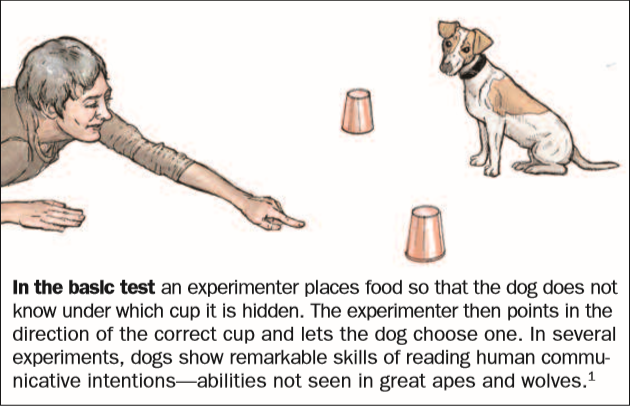
Hare: We use a powerful, but very simple technique: we hide food in one of two containers. Then we pointed to where we hide it, trying to help the dog search for it. Great-apes are terrible at this task. They don’t show much cognitive flexibility, since they have to learn the gesture. And every time you use a new gesture, they have to learn again. In contrast, in kids around age 12 months, you can use gestures they’ve never seen before, showing a degree of flexibility that it’s not seen in great apes. With dogs we performed the same series of experiments that had been done with apes and human children. The big surprise was that dogs are more like children.

            This was a controlled experiment: dogs were not using their noses nor reacting to motion. In science, there are two steps. First, you have to demonstrate a phenomenon. If it’s gravitational waves or dogs following gesture, you have to demonstrate the phenomenon. Then, you try to explain it. Often, people are so busy trying to explain something before they even demonstrate it exists. Once we demonstrated that dogs were following a pointing gesture, we wanted to know if they, for example, just smelled the hidden food. We found that wolves, dogs and foxes all preferred to use their eyes. When they can’t get the information they need from their eyes, then they use their nose. In these experiments, we found that dogs prioritize information from their eyes and memory over their nose.

Nogueira: One of the fascinating experiments with dogs you mentioned in the book uses an opaque barrier. Could you elaborate on it?
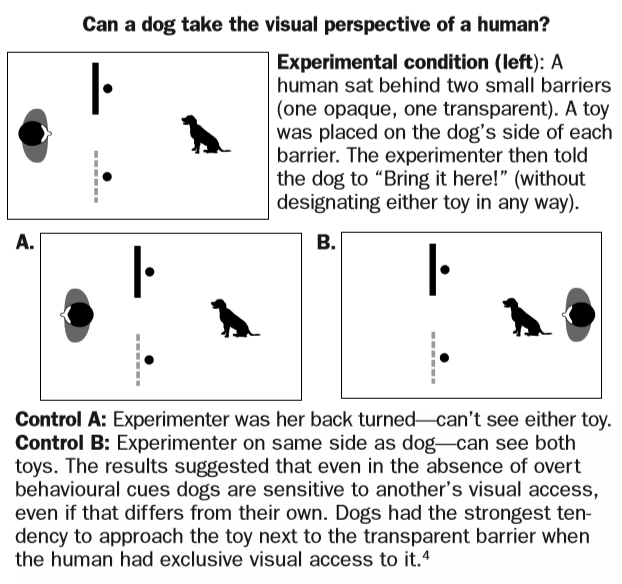
Hare: This is the work of Juliane Kaminsky, Michael Tomasello, and Josep Call. They have placed a ball behind two barriers, one opaque and one transparent. The dog can see both balls. In the experimental condition, a human, on the opposite side of the barriers, asks the dog to fetch the ball. The amazing thing is that dogs didn’t take the ball from the opaque barrier, which the human can’t see through; they favored the ball from the transparent barrier. In the control condition, where the human and the dog are on the same side, seeing the same thing, the dog choose the balls randomly. This experiment suggests that dogs know what humans can or cannot see.
Experiment conducted by Kaminski et al [2].
Nogueira: What are the possible explanations for why dogs are so good at reading human gestures?
Hare: One level of explanation is that, since dogs have seen these gestures several times, they slowly learned them. You can test this idea by using a gesture they’ve never seen before, for instance, point with your foot. You can also use a crazy gesture, like putting an object on top of the container where the food is located. Human children and dogs follow those gestures, but chimpanzees don’t. So, this hypothesis of slow learning was ruled out. But the hard part is this: how do you know if dogs really have a sophisticated flexible strategy, a theory of mind, which would mean that they’re thinking about the thought of others individuals?. The best evidence about other animals that have a theory of mind comes from great apes and maybe corvids. Regarding dogs, in fact, we don’t have the smoking-gun experiment to rule out alternative explanations. Then, we don’t have overwhelming evidence that dogs really have a theory of mind. For instance, the experiment with the opaque barrier, when the dog knows what people can or cannot see, hasn’t been replicated. Moreover, when you are studying something like a theory of mind, you want multiple experiments where an animal shows the same set of skills. We have that with great apes, but we don’t have with dogs yet.

Nogueira: From where do these remarkable skills of dogs come?
Hare: We tested several hypotheses. The first was that they were related to wolves, which are clever and maybe are also good at reading human gestures. The other was experience: they interacted with us and have slowly learned it. Finally, we considered if it’s something that happened during domestication. The evidence is mostly in favor of domestication: selection for friendliness is what allowed dogs to become more skilled at reading and using humans to solve problems. That was a surprise: why would being selected to be friendly make you smarter?

Nogueira: How has the Belyaev’ fox research helped to answer that question?
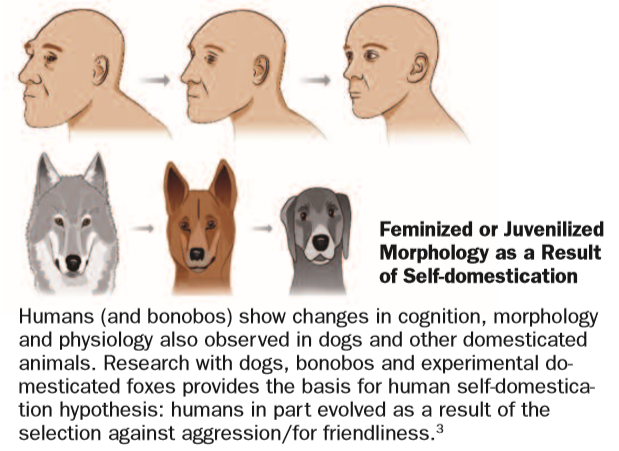
Hare: This brilliant experiment was conducted by a group of scientists in Siberia headed by Dmitri Belyaev. They have a control and experimental line of foxes, separated from each other. The control line was bred randomly. In the experimental line, Belyaev selected foxes that were attracted to or enjoyed interacting with people and weren’t fearful. In other words, Belyaev selected friendly foxes and let them breed together. Over many generations, the experimental foxes show a high frequency of traits that Belyaev didn’t select for, such as floppy ears, curly tails, and multi-color coats. The foxes also had physiological changes related to reduction in aggression and increased friendliness. This experiment was important to our research because they have a population that was experimentally domesticated. This was a great opportunity to test the idea that if domestication really is selection against aggression and for friendliness for people. It makes sense: how can you have a domesticated animal if it just wants to attack you or is too scared to come near you? The foxes also led us to questions about psychology: Is this remarkable ability of reading human gestures and to use humans as social tools also a product of selection for friendliness? The answer is yes: the domesticated foxes acted like dogs regarding their ability to read human gestures while the control line did not; they behaved like wolves.

Nogueira: You mention in your book that, “without an experiment, we were slipping from science into the realm of storytelling.” Could you elaborate why we need experiments? 
Hare: We published a paper in Science ruling out the first two hypotheses.1 The first is that dogs’ remarkable skills of reading human gestures evolved in wolves and were inherited. Second: lots of experience gives dogs these skills. We didn’t find any evidence for these hypotheses, so by default we favored the domestication hypothesis. We didn’t have evidence for it; we only had evidence against the other two hypotheses. If Belyaev had not done his domestication experiment, we would have been stuck at that point. Belyaev’s work established the possibility of testing if domestication made dogs able to read human gestures. We did an experiment with the foxes and we were surprised: even though they were not selected to be smarter or to be better at using human gestures, they were as a result of being selected for friendliness. We had direct evidence that it was domestication that did it.2 People might think that we domesticated dogs and made them smarter, but it does not mean it’s true.

Nogueira: If it’s not true, what probably have happened?
 Hare: People tend to think we created dogs as our own image. The best evidence suggests that animals had an advantage if they were friendly to people; they will reproduce more. I was in a restaurant eating outside and there were sparrows stealing food in a few inches of my feet. Those sparrows are eating tons of food, they are fat and healthy. That’s because they’re not afraid of people. I think something like that happened with dogs. In some point of human evolution, humans created a new food resource that if you could be friendly enough and not fearful of human population you were a big-time evolutionary winner. So, a population of wolves chose us; we didn’t choose them. Since hunter-gathers competed with wolves, it does not make sense to bring animal like wolves close to your children. The wolves realized, just like the birds under my table realized, the wonderful resource is scraps around human camps. After a few generations, they would show morphological changes, like those we’ve seen in the foxes, so people could tell the difference between those and the other wolves we competed with. That would be a major selection advantage.

Nogueira: How evolution is related to those changes?
Hare: Selection against aggression and for friendliness toward people creates several changes beyond that in morphology and psychology. Once these new differences are there, selection can act on that too. The point is that these new changes were not created; humans did not think to create dogs with floppy ears, for example. Some individuals had floppy ears because selection against aggression. Then people could breed these individuals to make more floppy ears. In other words, we took the advantage of the variance created by the selection against aggression. Evolution is not any different to gravity. If I drop a ball, I can’t stop it from dropping; it’s unstoppable force. Evolution is also unstoppable. Just because you can’t see, it does not mean it’s not acting all the time. Another example is that there is a white deer that comes to eat in my front yard. Normally, deer coming near humans is a bad idea. If you live in hundred yards from my house, a deer in your front yard would soon be dinner. But where I live in the suburbs everybody think deer are cute and adorable. Where I live, there is higher proportion of deer with different color coats; there are more white and albino deer. Research already shows that deer that are invading urban areas are larger, more social and have more offspring than deer living far away from humans.*

Nogueira: This process of domestication that happened with dogs probably have happened with other animals well, which we called convergence of evolution. What do we find, for example, when we compare chimpanzees and bonobos behavior regarding aggression, attitudes towards strangers and so on?
Hare: Bonobos served as a test-case for the hypothesis that natural selection, and not artificial selection, caused domestication. We called it self-domestication: species, through natural selection interfacing with its environment, end up like a domesticated animal. When we compare chimpanzees and bonobos to wolves and dogs, many changes between wolves and dogs were found between chimpanzees and bonobos. Chimpanzees are like the wolf of the ape family. Weather we’re talking about morphological or behavior characteristics, bonobos are really the dog of the Ape family.


Nogueira: At Skeptic, we advocate for evidence-base thinking. Since you had communicated with the public, what do you think is the best approach to shift people from faith-based thinking to evidence-based thinking, increasing, for example, the acceptance of evolution?
Hare: In US, people think that Christians have a problem with evolution, but the Catholic Church says evolution is consistent with Catholic doctrine. People love to play the “in and out” group card: science is something that other people do. If one is religious and faithful, one can’t believe in science, since science is anti-religion. That’s the typical in-out group response. People use strategies to target science, or evolutionary thinking, as the out group. As someone who studies evolution, the first thing is to notice that humans evolved to see in-out group everywhere. If you say something like “you’re religious and you’re not like me”, it’s over. As a science communicator, I’m going to say that Catholic Church has no problem with my research in order to turn-off the in-group out-group response. The entire intent of my book The Genius of Dogs is to get people who had never read about evolution and cognitive science excited to read about it, because they care about dogs. Darwin intentionally started The Origins of Species with a chapter about domestication, because he knew people were familiar with and were not threaten by it. I think we have to do the same thing.

Nogueira: Thank you for this amazing interview and keep up the fascinating research!


References
1.    Hare B, Tomasello M. 2005. Human-like social skills in dogs? Trends in Cognitive Sciences 9: 439–444. https://www.ncbi.nlm.nih.gov/pubmed/16061417.  
2.    Kaminski J, Bräuer J, Call J, Tomasello M. 2009. Domestic dogs are sensitive to a human’s perspective. Behaviour 146: 979-998 https://doglab.shh.mpg.de/ pdf/Kaminski_et_al_2009a_dogs_sensitive_humans _perspective.pdf.
3.    Hare, B Hare, B., Homo sapiens Evolved via Selection for Prosociality. Annu Rev Psychol. 68:155-186: https://www.ncbi.nlm.nih.gov/pubmed/27732802
4.    Hare B., M. Brown, C. Williamson, and M. Tomasello. 2002. “The domestication of social cognition in dogs.” Science. 298: 1634-6.
5.    Hare B., et al. 2005. “Social cognitive evolution in captive foxes is a correlated by-product of experimental domestication.” Current Biology. 15: 226-30.

Notes
* Here I corrected a minor mistake that was published in the original version at the magazine. I also corrected Figure 2's subtitle: the correct reference number is 2 (Kaminski et al, 2009). 

Saturday, February 3, 2018

To Be More Skeptical about Anti-Vaccination and Vitamins Supplements.


An Interview with Paul Offit
by Felipe Nogueira


Dr. Paul Offit is a pediatrician, the Chief of the Division of Infectious Diseases of the Children's Hospital of Philadelphia, and was the co-inventor of the rotavirus vaccine. He wrote several books about the importance of vaccines, clarifying the risks, which is often misunderstood. For example, the anti-vaccination movement insists that MMR vaccine causes autism. However, that relationship was already analyzed scientifically and we know it's wrong. In his book Do You Believe in Magic?, Offit makes a critical analysis of alternative medicine and the use of large dose of vitamins supplements. It’s important to raise the awareness about the vitamins supplements: it’s unregulated industry that claims vitamins supplements prevent disease. However, several studies [1-3] say most supplements do not prevent disease and some, such as vitamin E and beta-carotene [4], can increase the risk of cancer and mortality. Paul Offit’s website is www.paul-offit.com

Nogueira: Can you pinpoint when the anti-vaccination movement started? 
Offit: I think it started with the first vaccine. The smallpox vaccine was developed by Edward Jennen in 1700s. There was violent opposition to the vaccine in the early 1800s because that vaccine was mandated. I think the professional anti-vaccine people, like National Vaccine Information Center, Moms Against Mercury, Safeminds, and Generation Rescue, will say they would stop their anti-vaccine efforts if you simply make vaccines optional.

Nogueira: What exactly is the risk of Guillain-Barré syndrome [5] (GBS) after influenza vaccine? 
Offit: We can say with confidence that the 1976 swine flu vaccine had a risk of GBS in 1 per 100.000 who were given the vaccine. It’s not clear that since then any vaccine causes GBS. CDC and other groups that tried to categorize this always say that we cannot say is more common than 1 per million. The people are left with this vague notion that vaccine might cause GBS, but since the 1976 swine flu vaccine there is no clear evidence that it has.

Nogueira: If a vaccine causes a symptom, usually the disease the vaccine tries to prevent causes the same symptom. Can you clarify?
Offit: The best example is thrombocytopenia, which is low platelets level. There are a couple of studies and they all have been consistent and reproducible: the measles vaccine causes thrombocytopenia in 1 per 25-30 recipients. A measles virus also causes thrombocytopenia, but it is far more common. Another example: from 8 to 12 days after receiving chicken-pox vaccine, one can get a mild chicken-pox rash with 5 blisters, but sometimes can be 30 blisters. But chicken-pox natural infection can cause 300 to 500 blisters.

Nogueira: Knowing that MMR vaccine does not cause autism, how dangerous is to widespread information not corroborated by science?
Offit: I think once you scare people, it's hard to unscare them; once you open the Pandora’s box, it's hard to close it. The question was raised by Andrew Wakefield in 1998 with his publication in The Lancet, which wasn't a study. It was a simple case series: 8 children who had received the vaccine and developed symptoms of autism within 1 month. There are now 12 studies, looking to large number of people who did and didn't get the vaccine to answer the question "are you at a greater risk of having autism if you receive MMR vaccine?" The answer has been very reproducible: no. I think people are far more compelled by anecdote than they are by statistics. If Jenny McCarthy gets on Oprah and says "I watch my son get this vaccine, I watch his soul leave his eyes" and she cries, that's very compelling. A scientist on the show would say "fair question: could the vaccine cause autism?  Is this a causal effect relationship? Is this just a temporal effect or it is a plausible effect?" This is a scientific question and it has been answered in a scientific venue. But how do you trump the anecdote with science? The media became critical and they're not great at it.

Nogueira: Moving into vitamins supplements, when this idea begun? 
Offit: We need vitamins, no doubt it. If we don’t get enough of it from diet, we suffer diseases like pellagra, scurvy and rickets.[6] But we crossed the line from certain amount is good to therefore more would be better. That’s not true. Once you’re above the protective levels, you don’t need to be above of it. And I think the “big push” for supplements came in 1970s with Linus Pauling, who won Nobel Prizes in Chemistry and Peace. He was a strong voice and used to push vitamins supplements. Some of the earlier supplements were called Linus Pauling vitamins.

Nogueira: What about the risks of taking vitamin E? 
Offit: What amazes me about the vitamin E story is that there is a preparation of vitamin E that said "natural E 1000". If you look on the back label, it said that it had 3333% of the recommend daily allowance. You would have to eat about 1650 almonds, which are good source of vitamin E, to get the same amount from one gel capsule. That's not a natural thing to do. And if you take large doses of vitamin A, E or beta-carotene for prolonged period of time, you increase your risk of cancer and heart disease and potentially shorten your life. Those data are clear; there are twenty studies now that show that.
      
Nogueira: There is an article discussing that laboratory cut-off values for vitamin D are  not evidence-based. What can you say about it?
Offit: You’re right. Suddenly in the United States everybody has become vitamin D deficient. Certainly, it’s not because there’s been an outbreak of rickets; that hasn’t happened. It’s because of serum tests. I think what is considered normal values are not validated. Because of incorrect levels, all my friends tell me their doctors prescribed vitamin D for them. I like to think this is fad and will pass in a few years, because we’re doing no good and potentially some harm.    

Nogueira: Do you think there is enough evidence for vitamin D supplementation to prevent falls or fractures?
Offit: The U.S. Preventive Services Task Force (USPSTF) had at one point supported the use of vitamin D specially to prevent osteoporosis. The bone gets thinning in older people, so when they fall, they’re more likely to have fractures. Postmenopausal women are more likely to have these fractures. Then, vitamin D was recommended, since it helps to increase the uptake of calcium in the intestinal tract. However, with more data available, USPSTF does not recommend it anymore, since there is no clear evidence that postmenopausal woman or older people benefit from the intake of vitamin D or calcium.     

Nogueira: Where do you think came from this notion that vitamin supplements are natural? 
Offit: I give credit to the industry, which has been able to sell itself as natural. The nutraceutical and dietary supplements industry sell their supplements “as all natural, it can’t hurt you and it’s being made by old hippies”. This is not true. Pfizer and Hoffman-LaRoche are major players in dietary supplement game. It’s an unregulated industry with no obligation to support its claims. And, in United States, they have enough political influence to keep the FDA away from regulating them. Also, it’s very hard to be vitamin deficient; everything is supplemented. For example, it’s hard to suffer from folic acid deficiency in US, because grains, cereals, and pastas are supplemented with folic acid.

Nogueira: Your latest book is Bad Faith. What’s all about it?
Offit: It’s about how, in the United States, people have been able to use their faith to medically neglect their children. I think people should not be able to use the law to medically neglect their child. For example, 47 states have religious exemptions for vaccines. So, the book’s message is “we should not allow people in this country to use religion to put children in harm’s way.”

Nogueira: Have you planned a next book?
Offit: I have a new book coming out in April. The title is Pandora’s lab. Seven Stories of Science Gone Wrong. It’s about scientific discoveries that change the world for the worst.

Nogueira: Thanks for this thoughtful interview.  


Notes/References:

1. Fortman, S., et al. 2013. “Vitamin and Mineral Supplements in the Primary Prevention of Cardiovascular Disease and Cancer: An Updated Systematic Review for the U.S. Preventive Services Task Force. Annals of Internal Medicine,159 (12):824-834. 

2. Guallar, E., et al. 2013. “Enough is Enough. Stop Wasting Money on Vitamin and Mineral Supplements Annals of Internal Medicine,159 (12):850-851-851

3. Autier, P., et al 2014. “Vitamin D status and ill health: a systematic review”. The Lancet Diabetes & Endocrinology, Volume 2, Issue 1, pp 76-89.

4. Bjelakovic, G., et al 2012. “Antioxidant supplements for prevention of mortality in healthy and patients with various diseases”. The Cochorane Library, March, published online.

5. Guillain-Barré syndrome (GBS) is an autoimmune disease that attacks nerves cells causing muscle weakness and often paralysis. According to the CDC, approximately 3000 to 6000 people develop GBS each year in United States. Infection by Campylobacter jenuni, influenza and other infections are risk factors for GBS. More recently, countries with zika virus outbreak reported increased numbers of GBS cases.  For more information, visit the following CDC page: http://www.cdc.gov/flu/protect/vaccine/guillainbarre.htm 

6. Pellagra, scurvy and rickets are caused by deficiency of niacin (vitamin B3), vitamin C, and vitamin D respectively.